Why Flashcards Are Effective: The Science of Spaced Repetition
Many language learners spend hours writing down long lists of vocabulary, only to forget almost everything a few days later.
This frustration happens because human memory naturally fades when information is reviewed passively. Understanding why flashcards are effective comes down to one powerful cognitive principle: the spaced repetition method.
Here is how combining active recall with smart repetition helps you lock new words into long-term memory forever.
The Ebbinghaus Forgetting Curve
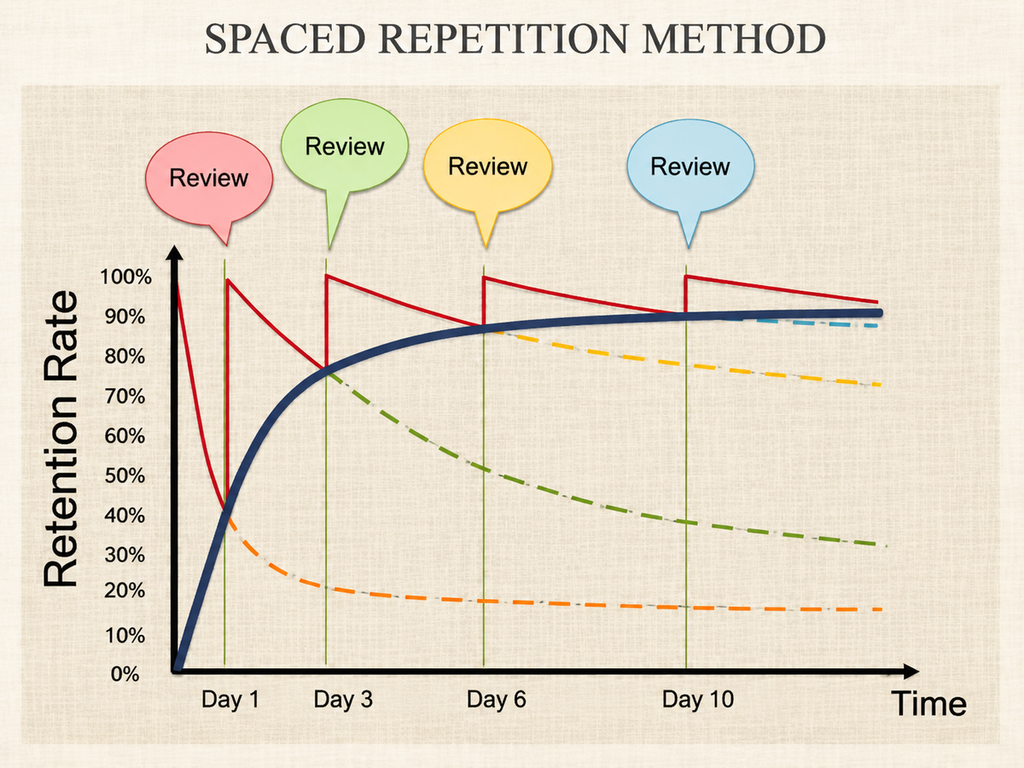
In the late 19th century, psychologist Hermann Ebbinghaus discovered how rapidly our brains lose unreviewed facts.
Without intentional repetition, you lose over 70% of newly learned vocabulary within just 24 hours (Day 1). By Day 6, memory retention drops near zero unless the knowledge is reinforced.
Spaced repetition solves this by interrupting the curve right before you forget:
- Review 1 (Day 1): Boosts recall back toward 100% immediately after initial learning.
- Review 2 (Day 3): Reinforces memory as the forgetting curve starts to flatten.
- Reviews 3 & 4 (Days 6 & 10): Expands the interval as recall stabilizes into permanent memory.
Two Reasons Flashcards Work So Well
Flashcards remain the ultimate tool for vocabulary retention because they align directly with brain science:
- Active Recall: Looking at a prompt forces your brain to search for the answer before flipping the card, building stronger neural connections than passive reading.
- Selective Focus: You spend zero time rereading words you already know, directing all your energy toward difficult cards.
How Koki Automates Spaced Repetition for You
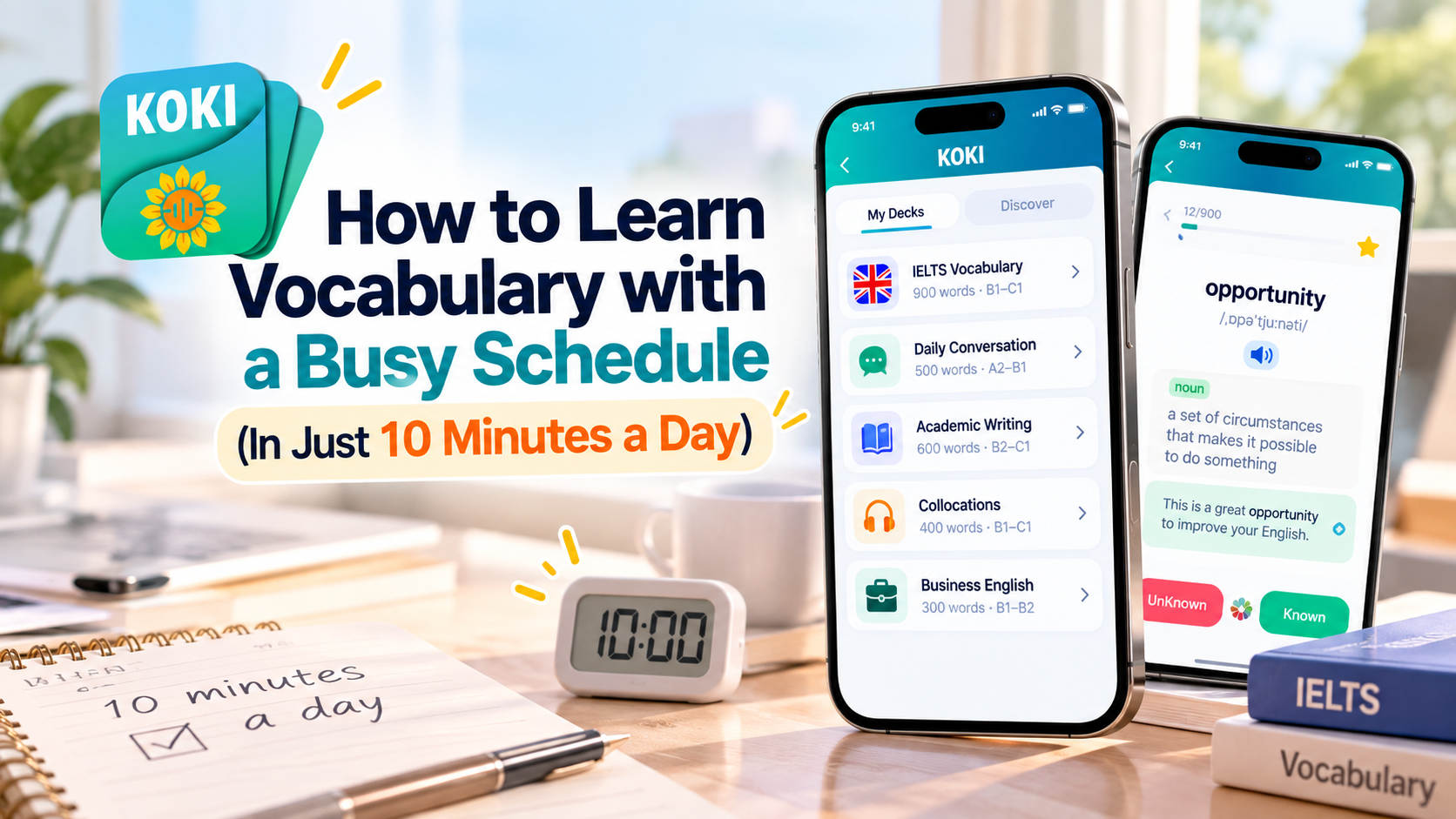
Koki Flashcards removes the guesswork by calculating your review schedule automatically.
1. Smart Interval Scheduling
During each session, simply swipe left for UnKnown or right for Known. Koki’s algorithm automatically schedules difficult words for immediate rounds while pushing mastered words to Day 3, 6, or 10.
2. Hide Hints for Deeper Active Recall
Tap the clover icon on any card to hide Pinyin, phonetic guides, or translations. This forces your brain to recognize character shapes and spellings independently.
3. Native Audio and Speaking Practice
Tap the speaker to hear authentic pronunciation, then tap the microphone to practice speaking aloud directly inside the app.
Study Smarter, Not Longer
Memorizing vocabulary does not require exhausting study marathons.
Understanding why flashcards are effective allows you to leverage science: short intervals, active retrieval, and automated review cycles.
Download Koki Flashcards today and experience how fast your vocabulary grows with just ten minutes of daily practice!