Spaced Repetition for Language Learning: Koki Guide
Most language learners quit not because they lack intelligence, but because they rely on exhausting, outdated study habits.
Cramming hundreds of vocabulary words in a single weekend marathon feels productive in the moment. Yet, within just a few days, almost all of those words vanish from your memory.
This happens because human memory decays predictably when left unreviewed. If you want to know how spaced repetition for language learning solves natural forgetting and locks vocabulary into permanent storage, here is the science behind the method and how Koki Flashcards automates every step.
Why Traditional Cramming Fails: The Forgetting Curve
In the late 19th century, psychologist Hermann Ebbinghaus mapped out how fast our brains discard new information—a phenomenon known as the Ebbinghaus forgetting curve.
Without timely reinforcement, memory retention drops rapidly:
- Day 1: Within 24 hours of first learning a word, you forget over 70% of what you studied.
- Day 3 to Day 6: Retention continues to slide steeply toward zero if no review occurs.
- Day 10: Only a faint trace of the original lesson remains.
Massed repetition (reading a list ten times in one sitting) fails because your brain treats repeated short-term exposure as temporary noise rather than essential knowledge.
How Spaced Repetition Builds Permanent Memory
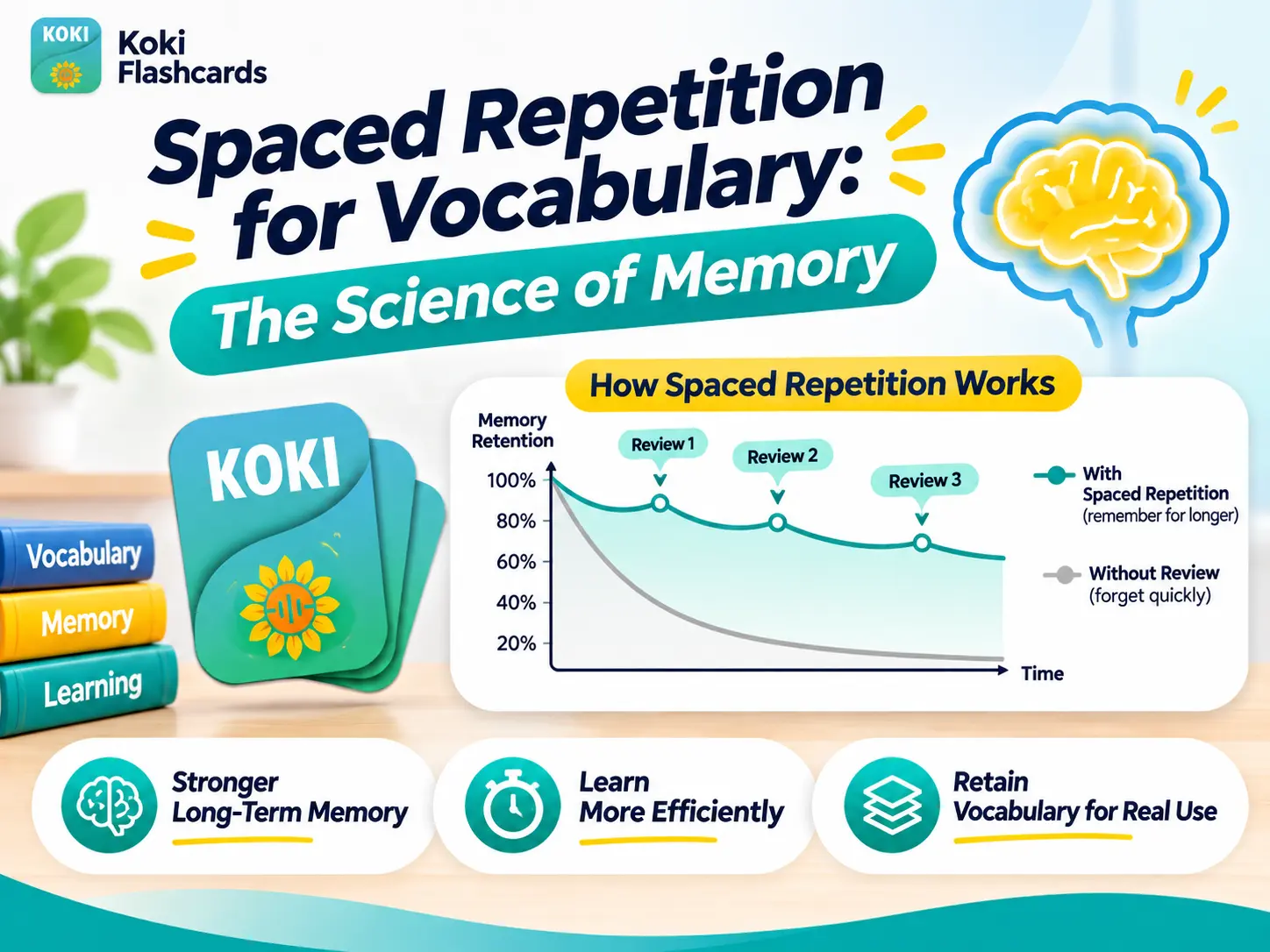
Spaced repetition for language learning works by interrupting the forgetting curve right before a memory fades completely.
Instead of reviewing every word every single day, you review cards at systematically expanding checkpoints:
- Review 1 (Day 1): Resets the steep initial drop and brings recall back up near 100%.
- Review 2 (Day 3): Re-engages memory after a two-day gap, strengthening neural pathways.
- Review 3 (Day 6): Expands the interval to three days, requiring deeper mental retrieval.
- Review 4 (Day 10+): Flattens the forgetting curve completely, transferring the word into permanent long-term storage.
Each spaced review forces your brain to work slightly harder to pull the definition from memory, which signals long-term importance.
How Koki Automates Spaced Repetition for You
Tracking Day 1, Day 3, Day 6, and Day 10 intervals manually with paper cards is nearly impossible once your vocabulary grows. Koki handles the entire scientific workflow automatically:
1. Effortless Known & UnKnown Swiping
During your study rounds, you never waste time calculating dates. Simply swipe left for UnKnown if you hesitated, or swipe right for Known if recall was instantaneous.
Koki’s algorithm manages your intervals behind the scenes:
- Cards marked UnKnown stay in immediate review rounds until you master them.
- Cards marked Known are automatically scheduled for Day 3, Day 6, or Day 10 intervals, appearing right at the optimal moment before you forget.
2. Bite-Sized Rounds & Live Progress Bars
Facing a massive 4,500-word exam list causes immediate burnout. Koki breaks huge decks into fast, manageable Rounds of 10 to 15 cards.
At the top of your study screen, live counters track Learning versus Memorized cards in real time. Watching your memorized bar climb after each 2-minute round provides steady motivation without overwhelm.
3. Clover Icon for Pure Active Recall
Spaced repetition only works when you genuinely retrieve answers from memory rather than guessing from hints.
Tap the Clover icon on any Koki card to hide phonetic guides, Pinyin, or translations. This forces your brain to recognize the raw word or character independently before flipping the card.
3 Simple Rules for Daily Spaced Repetition Success
To get maximum results from your Koki sessions, follow these practical habits:
- Aim for 10 Minutes Daily: Completing two or three short rounds every day beats a two-hour weekend cram session.
- Swipe Honestly: If you pause for more than three seconds to recall a meaning, swipe left to UnKnown so Koki reinforces it sooner.
- Trust the Schedule: Let Koki handle easy cards on wider intervals while you focus your energy on tricky terms.
Turn Short Study Sessions into Permanent Fluency
Forgetting is natural, but losing your hard work does not have to be.
Applying spaced repetition for language learning lets you work with your brain’s biology—spending less time studying while retaining thousands of words permanently.
Download Koki Flashcards today, start your first round, and let smart repetition lock every word into your memory!